
Last Updated on 1 hour ago by Saleha Asad
Disclosure: Independent editorial content. No affiliate links.
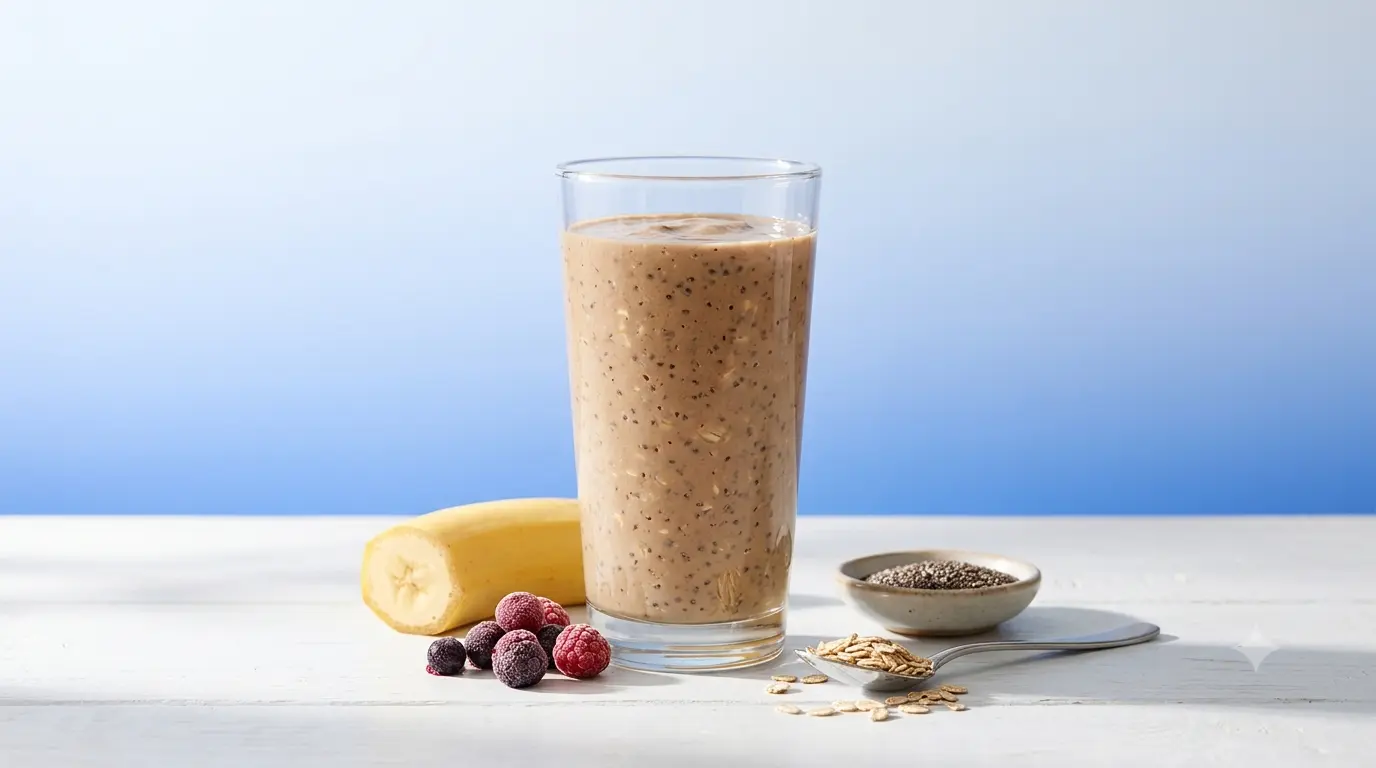
A high protein breakfast smoothie is one of the fastest ways to make breakfast feel effortless without sacrificing fullness. The best versions combine protein, fiber, and healthy fat, so you get steady energy instead of a sugar spike and crash. For more quick and easy breakfast ideas, see our complete breakfast guide.
What Is a High Protein Breakfast Smoothie (and Why It Actually Fills You Up)?
Contents
- 1 What Is a High Protein Breakfast Smoothie (and Why It Actually Fills You Up)?
- 2 Why protein matters
- 3 Why It Matters in 2026
- 4 Good for weight management
- 5 How to Make a High Protein Breakfast Smoothie in 5 Minutes
- 6 The 5-step system
- 7 Best Ingredients for a High Protein Breakfast Smoothie
- 8 Example: 25 g Protein Breakfast Smoothie
- 9 Banana protein shake
- 10 Protein smoothie without protein powder
- 11 Mistakes to Avoid
- 12 Too much fruit
- 13 FAQs (People Also Ask)
- 14 Conclusion
- 15 Next steps
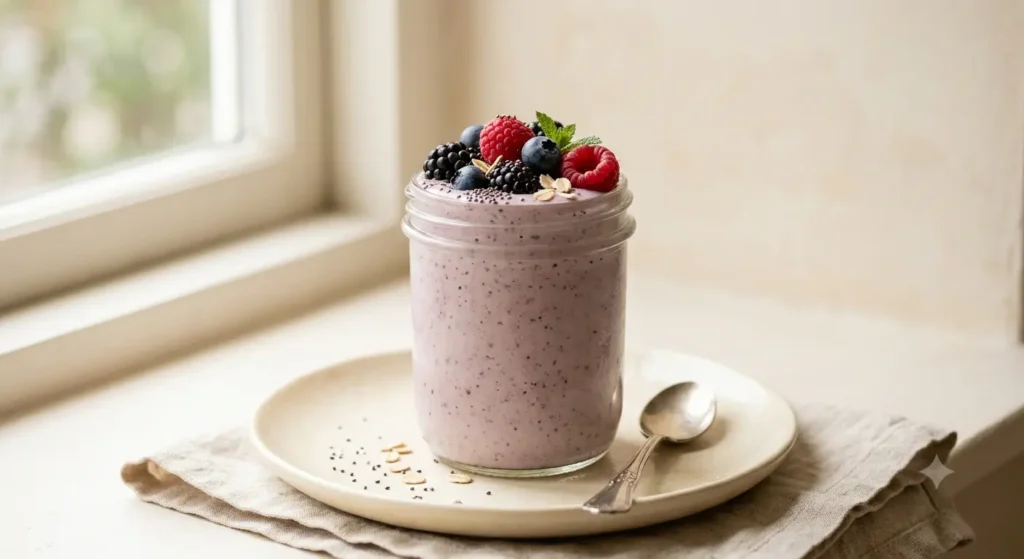
A high protein breakfast smoothie is defined as a blended breakfast drink that delivers enough protein to support satiety and energy, similar to the simple fruit smoothie recommended by Harvard Health. Fiber and healthy fat also help. Fiber slows down how fast your body digests the drink, and a small amount of fat (like nut butter or seeds) helps it feel more like a real meal. Most adults feel full and steady with about 20–30 g of protein in a morning smoothie.
A high protein breakfast smoothie typically includes:
- a protein base (Greek yogurt, cottage cheese, or protein powder).
- about 1 cup of fruit (banana, berries, or mango).
- a fiber source (oats, chia seeds, or flax).
- a small amount of healthy fat (nut butter, seeds, or avocado).
Why protein matters
Protein slows digestion and helps reduce hunger later in the morning, according to NIH guidance on protein. That is why a smoothie with Greek yogurt or protein powder usually works better than a fruit-only blend.
Why It Matters in 2026
A high protein breakfast smoothie matters because busy mornings leave little time for cooking. It gives you a practical way to eat well without slowing down your schedule.
Good for weight management
High-protein smoothies are often used in weight loss smoothies because protein improves fullness and reduces the urge to snack too soon. The most useful version is not just low-calorie; it is balanced and satisfying.
How to Make a High Protein Breakfast Smoothie in 5 Minutes
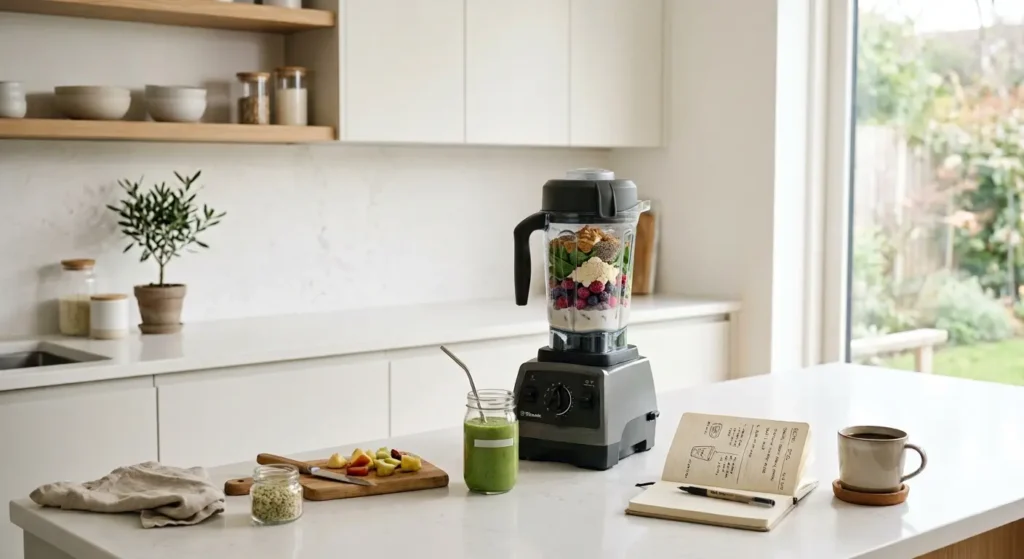
The simplest way to make a high protein breakfast smoothie is to use a repeatable formula.
The 5-step system
- Step: 1
Choose a protein base: Greek yogurt, protein powder or cottage cheese.
- Step: 2
Add frozen fruit: banana, berries, or mango.
- Step: 3
Add fiber and healthy fat: oats, chia seeds, flax, or nut butter.
- Step: 4
Add liquid: milk, almond milk or oat milk.
- Step: 5
Blend until smooth.
- Step: 6
Watch the sugar: use around 1 cup of fruit and avoid juice or added sweeteners.
Best Ingredients for a High Protein Breakfast Smoothie
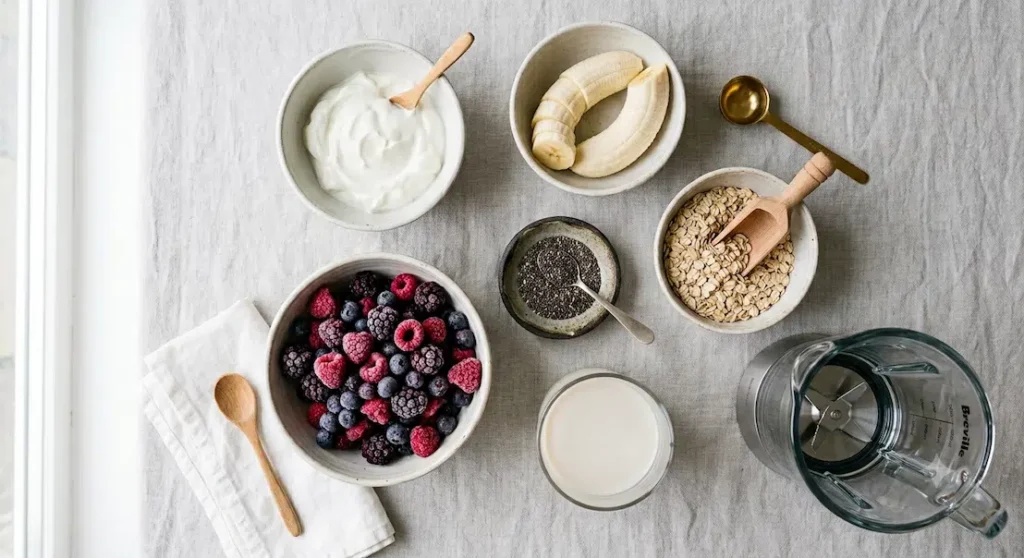
The best ingredients for a high protein breakfast smoothie are Greek yogurt, protein powder, banana, frozen berries, chia seeds, oats, and nut butter. These ingredients give the smoothie body, flavor, and staying power.
Greek yogurt and cottage cheese give a creamy texture and a solid protein boost. Seeds and oats add fiber so you don’t get hungry again quickly. Nut butter or a bit of avocado adds healthy fat for longer-lasting fullness.
Example: 25 g Protein Breakfast Smoothie
- 1 cup plain Greek yogurt (about 20 g protein)
- 1/2 cup frozen banana
- 1/2 cup frozen berries
- 2 tablespoons oats
- 1 tablespoon chia seeds
- 1 cup milk
Blend until smooth. Adjust liquid for your preferred thickness.
Banana protein shake
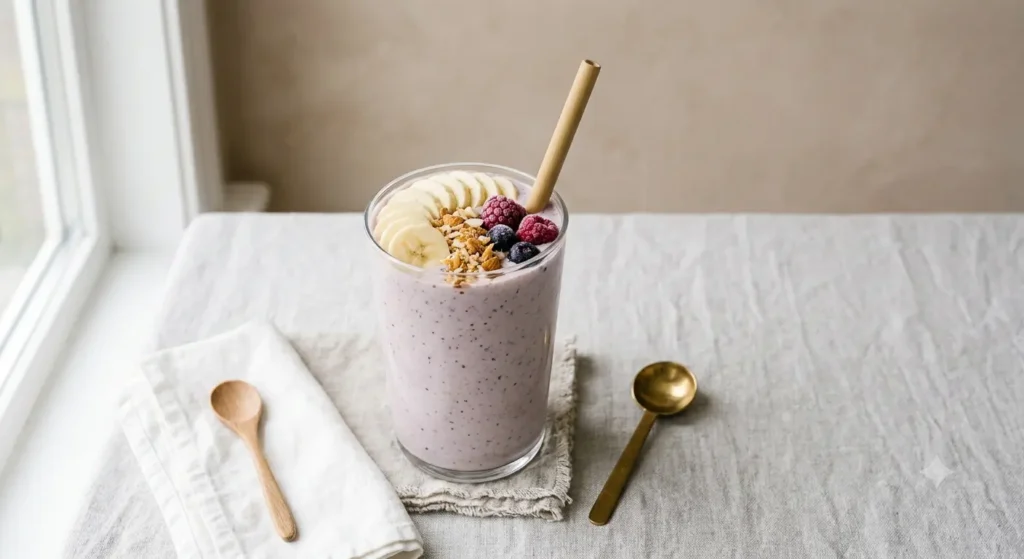
A banana protein shake is the easiest entry point for beginners because banana adds natural sweetness and creaminess. It works especially well with milk, Greek yogurt, and protein powder.
Protein smoothie without protein powder
A protein smoothie without protein powder can still be high in protein if you use Greek yogurt, oats, and seeds. This version is ideal for whole-food readers. For more ideas using high protein yogurt, check our Greek yogurt breakfast guide.
Mistakes to Avoid
The biggest mistake is making the smoothie too sweet and too low in protein. Another mistake is forgetting fiber, which makes the drink less filling.
Wrong texture: too thin feels like a snack, too thick can be hard to drink. Aim for something smooth but still drinkable.
Too much fruit
Fruit is useful, but it should not be the whole smoothie. A better formula adds protein and fiber so the drink lasts longer.
FAQs (People Also Ask)
A high protein breakfast smoothie is a blended breakfast that gives you enough protein to feel full and energized. The best versions include yogurt, seeds, fruit, and sometimes protein powder.
Yes. A protein smoothie makes a solid breakfast if it’s built right: enough protein, some fiber, and a bit of healthy fat.
Yes, it can help with weight loss by improving fullness and reducing snack cravings. The key is keeping sugar low and protein high.
Most people do well with 20–30 g of protein in a breakfast smoothie. If you train hard or want a very filling meal, aim closer to 30 g.
Conclusion
A high protein breakfast smoothie works best when it is simple, balanced, and repeatable. Use protein first, then add fruit, fiber, and a small amount of liquid. If you want a breakfast that feels easy and still keeps you full, this is one of the best options.
Next steps
- Pick one protein base.
- Save one smoothie formula.
- Try it tomorrow morning and note your energy.
Sources and Methodology
This article is based on current nutrition guidance and structured data best practices for informational health content. Ingredient nutrition values are aligned with USDA FoodData Central and general dietetic recommendations.
General protein and satiety information reflects widely cited research summarized by sources such as NIH / MedlinePlus and Harvard T.H. Chan School of Public Health. Practical diet advice aligns with guidance from the Academy of Nutrition and Dietetics.
Structured data recommendations follow Google Search Central guidelines for FAQ and HowTo schema. All information is presented for general educational purposes and is not a substitute for personalized medical or nutrition advice.
Last reviewed: August 11, 2026.

Leave a Reply