

LAST UPDATED: October 07, 2026
Introduction
Meal prep on a budget is the exact science of replacing high-cost grocery line items with Maximum-Value kitchen alternatives while keeping your weekly menu dynamic and fresh. If your previous batch cooking attempts felt repetitive or failed to stop your monthly grocery bills from climbing, you need a completely different tactical framework.
In This Guide You’ll Learn:
- The Ingredient Swap Matrix that exchanges expensive proteins and veggies for high-impact budget equivalents.
- How to use the Pantry Stretching Method to stretch four days of ingredients across an entire week safely.
- The Hidden Cost Audit for spotting inflated grocery store packaging traps instantly.
- Real math examples for reducing per-serving costs below the two-dollar mark.
- Strategic cross-linking to complementary kitchen guides for more variety.
Grab a notepad, and let’s break down how to engineer a budget-proof kitchen routine.
Smart Kitchen Swaps: Budget Comparison Cards
To keep your grocery budget low while enjoying satisfying meals, you must swap expensive components for intelligent, budget-friendly matches. Instead of buying high-priced specialty cuts, use our smart substitution matrix:
High-Cost Item: Boneless Chicken Breasts
Smart Budget Swap: Bone-in Chicken Quarters
Financial Savings: Saves up to 50% per pound
Culinary Benefit: Retains moisture much better during roasting
High-Cost Item: Fresh Gourmet Greens
Smart Budget Swap: Cabbage & Hearty Slaw Mixes
Financial Savings: Lasts 3x longer in fridge
Culinary Benefit: Zero spoilage waste and great crunch
High-Cost Item: Store-Bought Pasta Sauces
Smart Budget Swap: Crushed Canned Tomatoes & Spices
Financial Savings: Cuts cost by nearly 70%
Culinary Benefit: No hidden sugars or artificial preservatives
High-Cost Item: Pre-Packaged Snack Bars
Smart Budget Swap: Bulk Rolled Oats & Peanut Butter
Financial Savings: Pennies per homemade portion
Culinary Benefit: Sustained energy without processing fees
By making these exact swaps on your shopping list, your total checkout cost drops immediately without sacrificing the quality of your meals.
When building a sustainable routine, keeping your nutrition balanced without overspending is key. If you want to dive deeper into hitting your daily nutritional targets while keeping grocery bills low, you can explore our detailed high-protein meal prep guide for more budget-friendly protein strategies.
The Pantry Stretching Method: Making Small Portions Go Further
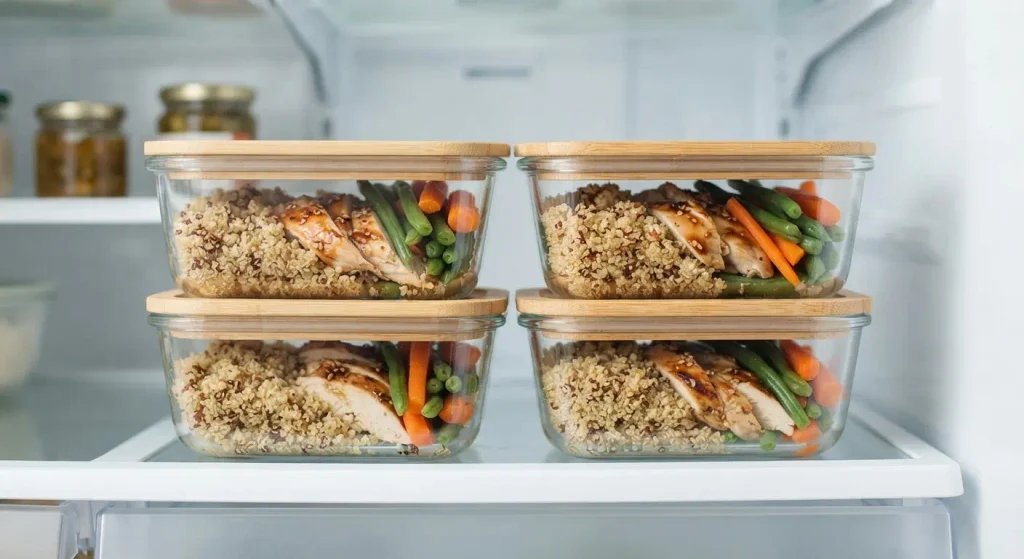
When money is tight, you cannot afford to let expensive ingredients sit idly in the fridge. The Pantry Stretching Method relies on using inexpensive shelf-stable items like dried legumes, barley, and bulk rice as volume multipliers.
When you cook a modest amount of animal protein, pairing it with an expanded base of lentils or grains doubles the total volume of your meal. This keeps your grocery budget protected while ensuring every container feels heavy, filling, and complete.
The Hidden Cost Audit: Beating Supermarket Packaging Traps
Supermarkets use clever packaging to charge you extra for minimal effort. Conducting a quick cost audit in your cart reveals where your money is leaking:
- The Pre-Cut Tax: Buying pre-sliced bell peppers or cubed squash often doubles the price per pound compared to buying whole vegetables.
- The Portion Premium: Buying individually wrapped single servings of grains or nuts costs significantly more than buying large bulk bags and portioning them out at home.
- The Water Weight Trap: Always inspect packaged meats to ensure you aren’t paying premium prices for excess added water retention solutions.
Balancing your weekly ingredients requires looking closely at how macro-friendly meals vs standard diets compare when you are trying to cut costs without throwing your daily nutritional targets off track.
Per-Serving Math: Engineering Meals Under Two Dollars
Let’s look at the actual numbers behind building an ultra-low-cost, high-protein meal using smart kitchen math:
- Base Layer (1 Cup Cooked Brown Rice): Approx. $0.30 per serving.
- Protein Anchor (4 oz Roasted Chicken Quarter Meat): Approx. $0.65 per serving.
- Bulk Veggie Mix (Sautéed Cabbage & Onions): Approx. $0.35 per serving.
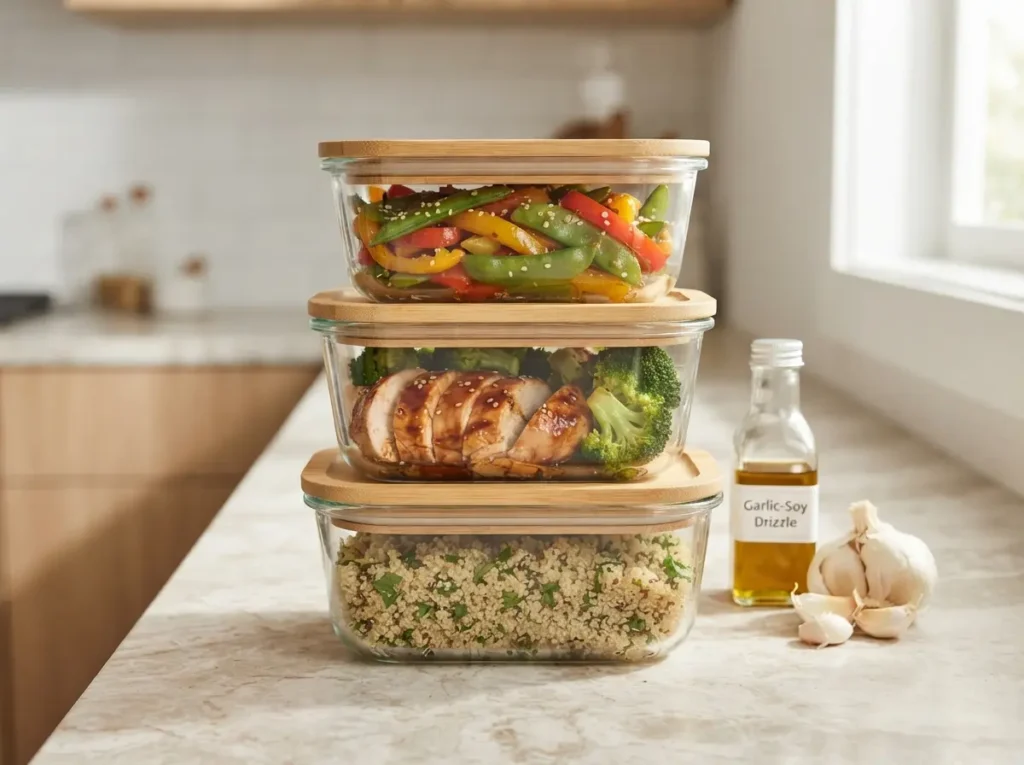
- Flavor Sauce (Homemade Garlic-Soy Drizzle): Approx. $0.15 per serving.
- Total Cost Per Complete Meal: $1.45
By keeping your math tightly aligned with bulk purchasing, you feed your entire household delicious meals for a fraction of standard retail costs.
The Zero-Fatigue Flavor Rotation System
Eating the same budget meal five days straight causes burnout. To fix this without buying extra groceries, use this flavor rotation system:
- Monday to Wednesday: Keep your prepped base neutral with salt, pepper, and garlic oil.
- The Flavor Shift (Thursday): Split your remaining base into two containers; turn one into a smoky southwest bowl using cumin, and the other into an Asian-inspired stir-fry using vinegar.
- Result: You enjoy distinct, exciting flavor profiles without purchasing an entirely separate set of ingredients.
You don’t need to spend your entire weekend trapped in the kitchen; adopting methods similar to a sunday-free keto meal prep approach allows you to spread out your cooking effortlessly throughout the week.
Common Budget Prep Mistakes That Cost Money
- Shopping Without Inventory Checks: Buying ingredients you already own leads to duplicate items expiring in the back of your pantry.
- Ignoring Freezer Lifespans: Forgetting to freeze leftover bread, stock, or proteins before they spoil turns potential savings into literal food waste.
- Overbuying Highly Perishable Produce: Grabbing large quantities of delicate berries or soft herbs without a concrete meal slot guarantees they will turn to mush.
Budget Batching vs. Random Grocery Runs
Strategy: Random Daily Shopping
Weekly Food Expenditure: Very High ($110+)
Mental Effort: High (Daily store trips)
Food Spoilage Rate: High (Forgotten items rot)
Long-Term Financial Stability: Low (Constant budget leaks)
Strategy: Rigid Fixed Batching
Weekly Food Expenditure: Medium ($55)
Mental Effort: Medium
Food Spoilage Rate: Medium (Boredom leads to waste)
Long-Term Financial Stability: Moderate
Strategy: Strategic Budget Swap Prep
Weekly Food Expenditure: Low ($32–$38)
Mental Effort: Low (Structured system)
Food Spoilage Rate: Near Zero (Fully optimized)
Long-Term Financial Stability: High (Consistent monthly savings)
Frequently Asked Questions
What is the Ingredient Swap Matrix?
It is a practical system that exchanges high-cost grocery items (like boneless meats and pre-cut produce) for economical, maximum value alternatives to protect your budget.
How does the Pantry Stretching Method work?
It uses low-cost, shelf-stable bulk staples like lentils and grains to expand the volume of your meals, making smaller portions of expensive ingredients go much further.
Pre-cut vegetables, individually wrapped single-serving portions, and heavily branded pantry staples are the primary sources of hidden budget leaks.
How do I calculate per-serving costs accurately?
You divide the total cost of each bulk package by the exact number of servings it yields, ensuring your individual meals stay under your target budget.
How do I prevent meal fatigue on a tight budget?
You use a flavor rotation system keeping your base ingredients neutral and shifting their taste profile mid-week with inexpensive pantry spices and sauces.
Why do people waste money on fresh produce?
People overbuy delicate perishables without a planned recipe slot, leading to spoilage before the items can be cooked.
How much can smart prep save per month?
Households that transition from ad-hoc shopping to structured budget prep typically lower their monthly food expenses by 30% to 35%.
Where can I find more modular prep concepts?
For additional flexible cooking strategies and layout ideas that complement your financial routine, check out our guide on easy meal prep ideas.
Conclusion & Next Steps
Mastering your kitchen finances requires shifting away from expensive shortcuts and leaning into intelligent ingredient swaps, pantry stretching, and maximum value math. By managing your costs carefully, you protect your wallet and enjoy delicious food every single day.
- Next Step 1: Review your shopping list and replace two high-cost items with items from our Ingredient Swap Matrix.
- Next Step 2: Audit your pantry staples before heading out to the supermarket.
- Next Step 3: Explore our related guide on easy meal prep ideas for more wallet-friendly inspiration.