
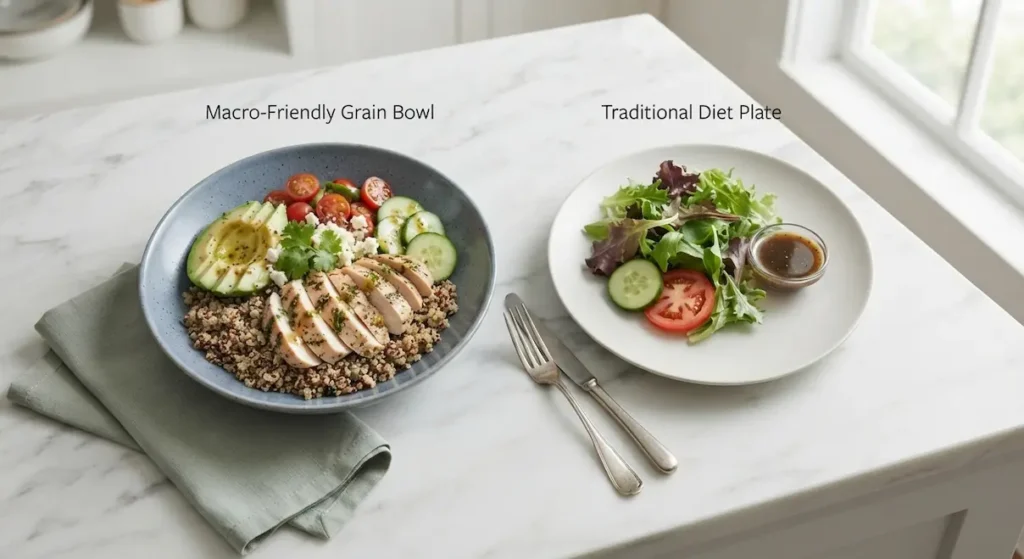
Traditional diets fail because strict food bans lead to burnout. Macro friendly meals offer a sustainable alternative by focusing on flexible portions of protein, carbs, and fats. Using a simple “Mix-and-Match” approach, you can achieve your health goals without starving or giving up the foods you love.
Last updated September 2026.
Disclosure: This article contains independent editorial content and no affiliate links.
Introduction
Choosing the right way to eat can feel confusing. Should you cut out all carbs, count every single calorie, or just try to eat clean? Most people struggle because traditional diets force you to follow strict rules that are very hard to keep up with for a long time. Macro friendly meals offer a much better path, focusing on food freedom and balance instead of hunger and strict limits.
In this guide you’ll learn:
- The hidden psychological traps of traditional dieting versus macro flexibility.
- A head-to-head matchup breakdown of popular dietary approaches.
- Why rigid meal plans usually fail and why behavioral consistency wins.
- How to use a simple “Mix-and-Match” method to build your plate instantly.
- A fresh perspective on how real-life scheduling impacts your nutrition choices.
Let’s look at how these methods compare so you can pick the easiest and healthiest choice for your goals.
The Diet Problem: Why Traditional Diets Do Not Last
Traditional diets usually ask you to cut out entire food groups, drop your calories too low, or eat only a few boring foods. While these methods might help you lose weight fast at first, they usually leave you feeling tired, grumpy, and hungry all the time.
Why do strict meal plans fail?
When a diet tells you that certain foods are completely banned, your brain wants those foods even more. Psychological restriction triggers mental fatigue, leading to intense cravings and eventual binge cycles.
How is a balanced approach different?
Instead of banning foods, a sustainable approach teaches you how to balance your portions. You can still enjoy your favorite items while teaching your body what it needs to stay healthy and energized.
What Are Macro Friendly Meals? (The Easy Way to Eat)
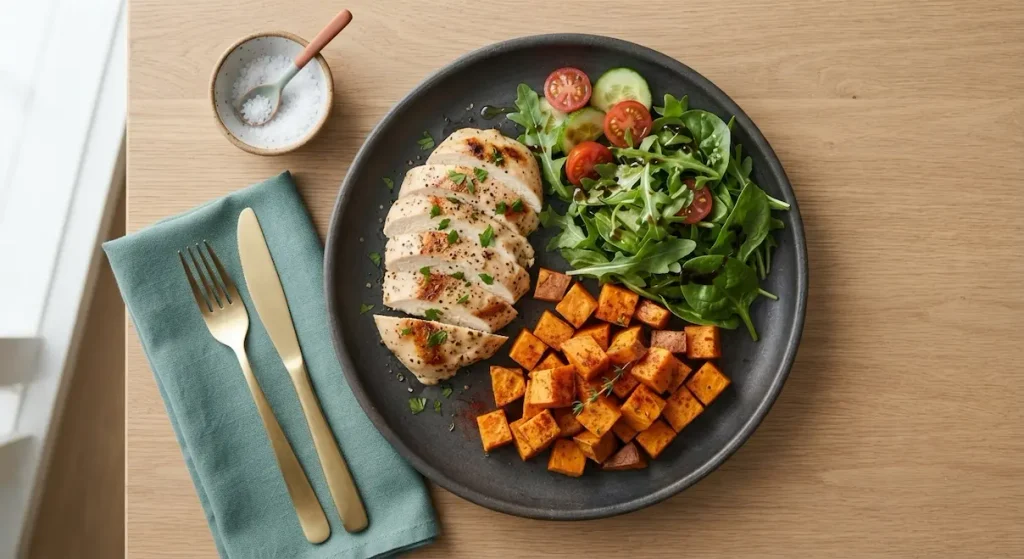
Macro friendly meals are defined as food plates structured to balance proteins, carbohydrates, and fats according to your body’s daily energy needs. In simple terms, instead of stressing over complicated numbers, you focus on the three main parts of your food: Protein, Carbs, and Fats.
What is the real benefit of tracking macros?
Protein helps keep your muscles strong and stops hunger hormones. If you want to plan your weekly dishes ahead, following a structured high-protein meal prep guide can make hitting your daily targets completely effortless.
Why is this method easier to stick to?
Because no food is completely forbidden, you can easily change your meals to fit a family dinner, a restaurant outing, or whatever ingredients you currently have in your kitchen.
Head-to-Head Showdown: Macro Eating vs. Standard Diets
Instead of relying on traditional comparison tables, let’s examine how these two distinct approaches stack up against each other in real-world application
1. Macro Friendly Eating (The Clear Winner)
- What it is: Balancing your daily protein, carbs, and fats without banning any specific food groups.
- Why it wins: It gives you high flexibility, protects your muscle mass, and keeps your energy levels stable.
- Flexibility Score: High / Sustainable
- Verdict: ⭐⭐⭐⭐⭐ (4.9/5) Best choice for long-term health, fat loss, and peace of mind.
2. Strict Calorie Counting
- What it is: Obsessing solely over total calories consumed versus burned, regardless of food quality.
- The Reality: While it drops weight quickly, it often leaves you feeling drained and lacking proper nutrition.
- Flexibility Score: Low / Exhausting
- Verdict: ⭐⭐⭐ (4.1/5) Good for short-term tracking, but hard to maintain for months.
3. The Keto Diet
- What it is: Eliminating almost all carbohydrates and replacing them with high-fat foods.
- The Reality: It can work wonders for specific medical or fast goals, but cutting out whole grains and fruits makes everyday life difficult. Many people try strict routines like a weekend Keto meal prep session only to burn out within a few weeks due to the lack of dietary flexibility.
- Flexibility Score: Very Low / Restrictive
- Verdict: ⭐⭐⭐ (3.7/5) Too strict for a normal, everyday sustainable routine.
4. Traditional Clean Eating
- What it is: Focusing entirely on whole foods while cutting out anything processed.
- The Reality: Great for general wellness, but lacks the precise macro control needed if your goal is specific fitness or muscle retention.
- Flexibility Score: Moderate
- Verdict: ⭐⭐⭐⭐ (4.3/5) Healthy, but lacks the targeted flexibility of macro tracking.
The “Mix-and-Match” Plate Builder
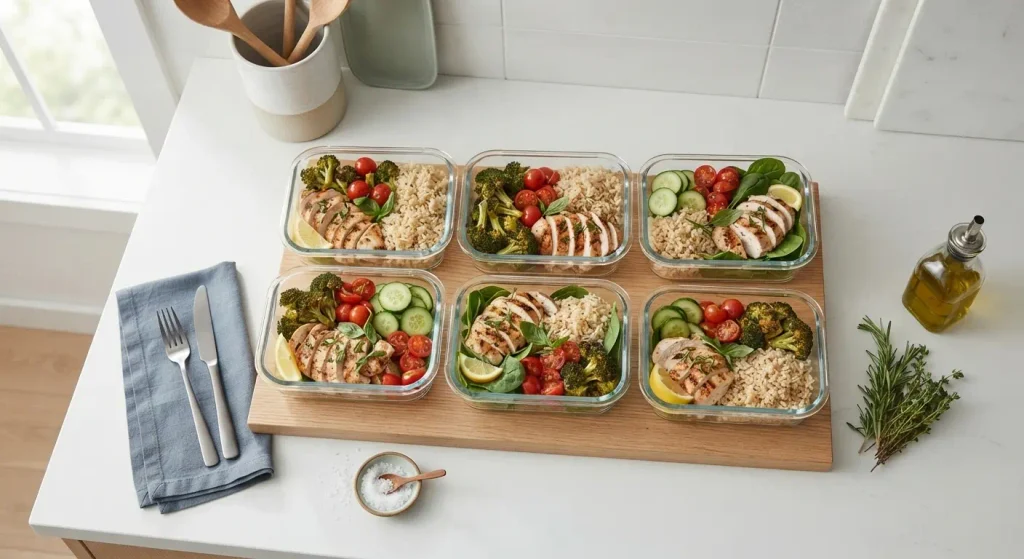
Whether you are comparing different diet styles or trying to fix lunch on a busy day, keeping things simple works best. Exploring a collection of easy meal prep ideas can help you apply this three-part guide seamlessly throughout your workweek.
- Part 1: The Protein Base (Your Anchor) Fill a palm-sized spot on your plate with lean protein like chicken breast, paneer, eggs, tofu, or lentils.
- Part 2: The Complex Carb (Your Fuel) Add a fist-sized portion of healthy carbs like brown rice, oats, whole-wheat roti, or sweet potatoes.
- Part 3: The Smart Fat (Your Modulator) Finish with a small touch of healthy fats like a few drops of olive oil, a handful of almonds, or slices of avocado.
Real-Life Application: Eating Out and Social Flexibility
One of the biggest advantages of macro-friendly eating over traditional diets is how it handles real-world social situations.
With rigid diets, attending a wedding or dinner usually means breaking the rules and feeling guilty. Macro tracking lets you check your daily intake ahead of time, save a bit of carb or fat buffer, and enjoy restaurant food without derailing your weekly progress.
Common Mistakes in Both Approaches and How to Fix Them
No matter which eating style you choose, small errors can slow down your progress:
- Making It Too Complicated: Trying to count every single gram on day one instead of starting with simple portion control.
- Forgetting Protein: Eating meals made entirely of carbs, which makes you feel hungry again very quickly.
- Hidden Oils and Sauces: Pouring too much cooking oil or heavy dressing on healthy food without realizing how many extra calories it adds.
Frequently Asked Questions (FAQ)
Macro friendly meals are simple, balanced dishes designed to give your body the right mix of protein, carbohydrates, and healthy fats.
Yes, because they focus on food flexibility and balance, making them much easier to maintain for months and years.
No, you can start by using standard measuring cups and hand portions before ever buying a kitchen scale.
Yes, balancing your macros while eating slightly fewer calories than you burn leads to steady, healthy fat loss.
It can sound technical at first, but using a simple plate-building approach makes it very easy to learn.
Trying to change everything overnight instead of building small, simple daily habits.
They let you fit restaurant foods into your day by balancing your other meals accordingly.
They cost the same as your normal grocery shopping because you are buying everyday whole foods.
Your Final Verdict and Action Plan
When comparing your options, macro friendly meals clearly beat strict traditional diets by offering freedom, clear structure, and long-term results.
- Top 3 Takeaways:
- Stop following strict food bans and focus on balanced nutrition instead.
- Use simple hand portions to keep your meal prep completely stress-free.
- Keep protein steady in your meals to control your appetite and protect your energy.
Next Steps:
- Look at your current eating habits and compare them with the showdown section above.
- Try using the simple 3-part plate builder for your next meal.
Sources & Methodology
- Validates Hunger Control & Energy Stability: The American Journal of Clinical Nutrition Study on Satiety and Protein Effects
- Supports Flexible Dieting & Muscle Preservation: Journal of the International Society of Sports Nutrition Research
Pingback: 5-Day High Protein Meal Prep Plan: The Secret to Non-Soggy Prep -
Pingback: Meal Prep on a Budget: Easy Kitchen Swaps to Cut Grocery Costs